
MW4 game modes: Campaign, multiplayer and DMZ
Call of Duty®: Modern Warfare® 4 game modes: campaign, multiplayer and DMZ compared, with large-scale vehicle combat and Warzone 2.0 integration.
FAQ
What game modes are in Modern Warfare 4?
Is DMZ in Modern Warfare 4?
What is different about Modern Warfare 4 multiplayer?
Modern Warfare 4 has three pillars — campaign, multiplayer and DMZ — and they are not three settings of the same game. They have different rules, different progression and different failure conditions. Warzone 2.0 runs alongside all three, sharing MW4’s weapons and operators.
The three pillars
| Campaign | Multiplayer | DMZ | |
|---|---|---|---|
| Players | Single-player | 1 per team, large scale | Solo or squad |
| Core loop | Story missions | Round-based matches | Deploy, loot, extract |
| Failure | Restart mission | Lose the round | Lose your gear |
| Progression | Mission rewards | Weapon levels, Battle Pass | Loot, gear, operator kits |
| Available | Oct 16 (early access) | Oct 22 | Oct 20 (early access) |
Campaign
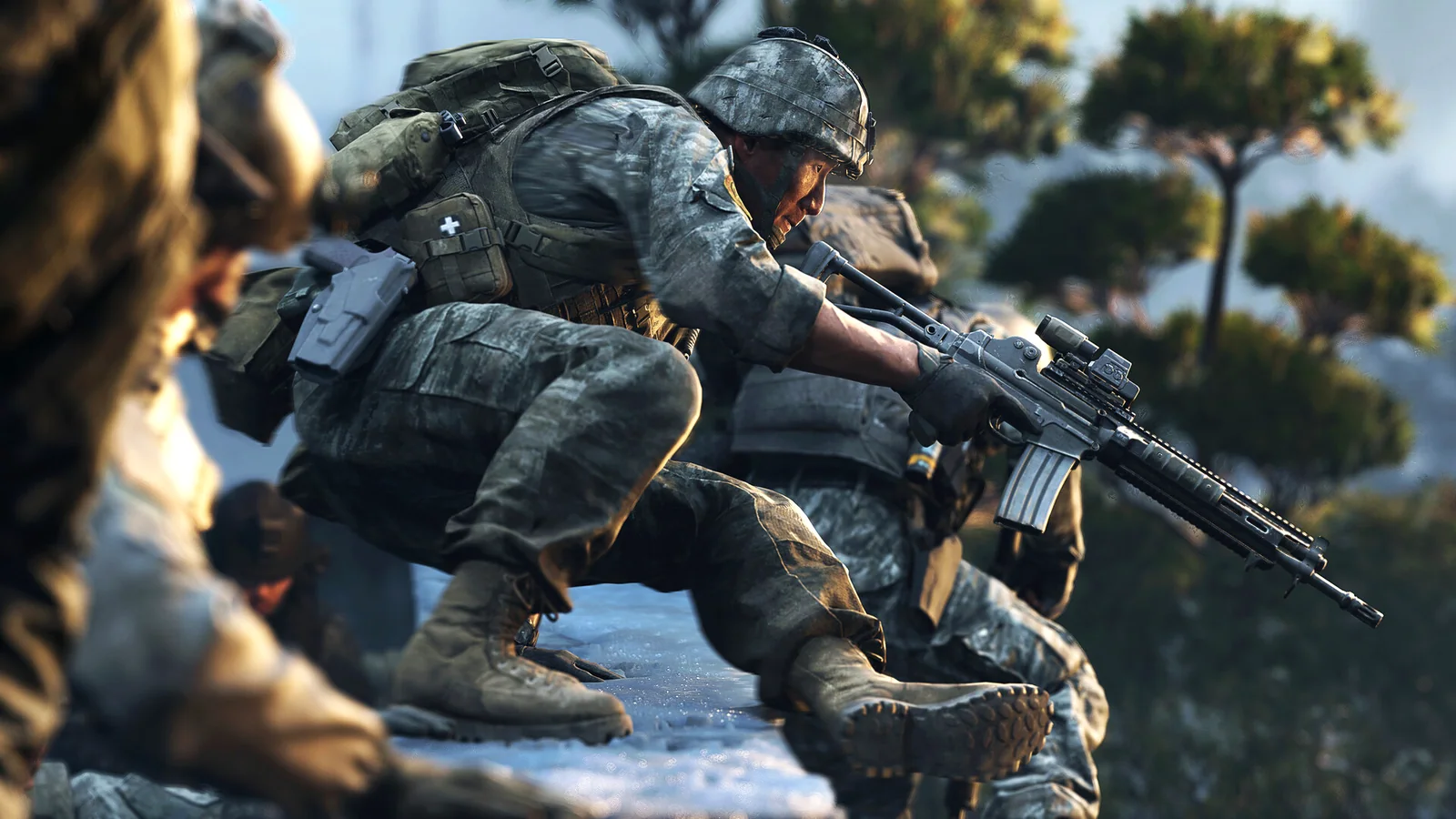
The campaign follows a young squad of South Korean soldiers on the collapsing front lines, while Captain Price wages a personal war from the shadows half a world away.
The store listing gives the operation structure directly — five distinct settings and combat styles in one campaign:
| Setting | Combat style |
|---|---|
| Korea | Trench warfare |
| New York | Close-quarters combat |
| Paris | High-octane chases |
| Mumbai | SAS night raids |
| Occupied territory | City-wide assaults |
Eight studios contribute to the campaign: Infinity Ward, Beenox, Digital Legends, Activision Shanghai, Raven Software, Treyarch, Sledgehammer Games and High Moon Studios. Campaign work is the most authorially unified part of a Call of Duty release, and multi-studio campaigns tend to show seams in pacing rather than mechanics.
Early access in Call of Duty has historically meant one of three things, and they are not equivalent:
- The full campaign, minus nothing — the mode most used, gated to build attention early.
- A subset of missions — the strongest missions released first, the rest later.
- Prologue only — a single opening mission that establishes tone and nothing else.
Which one Modern Warfare 4 used is worth confirming against what players actually got on October 16, because it changes how the campaign should be read.
Multiplayer
Multiplayer is described as grounded, precise combat where fluid movement, player choice and greater control define every engagement.
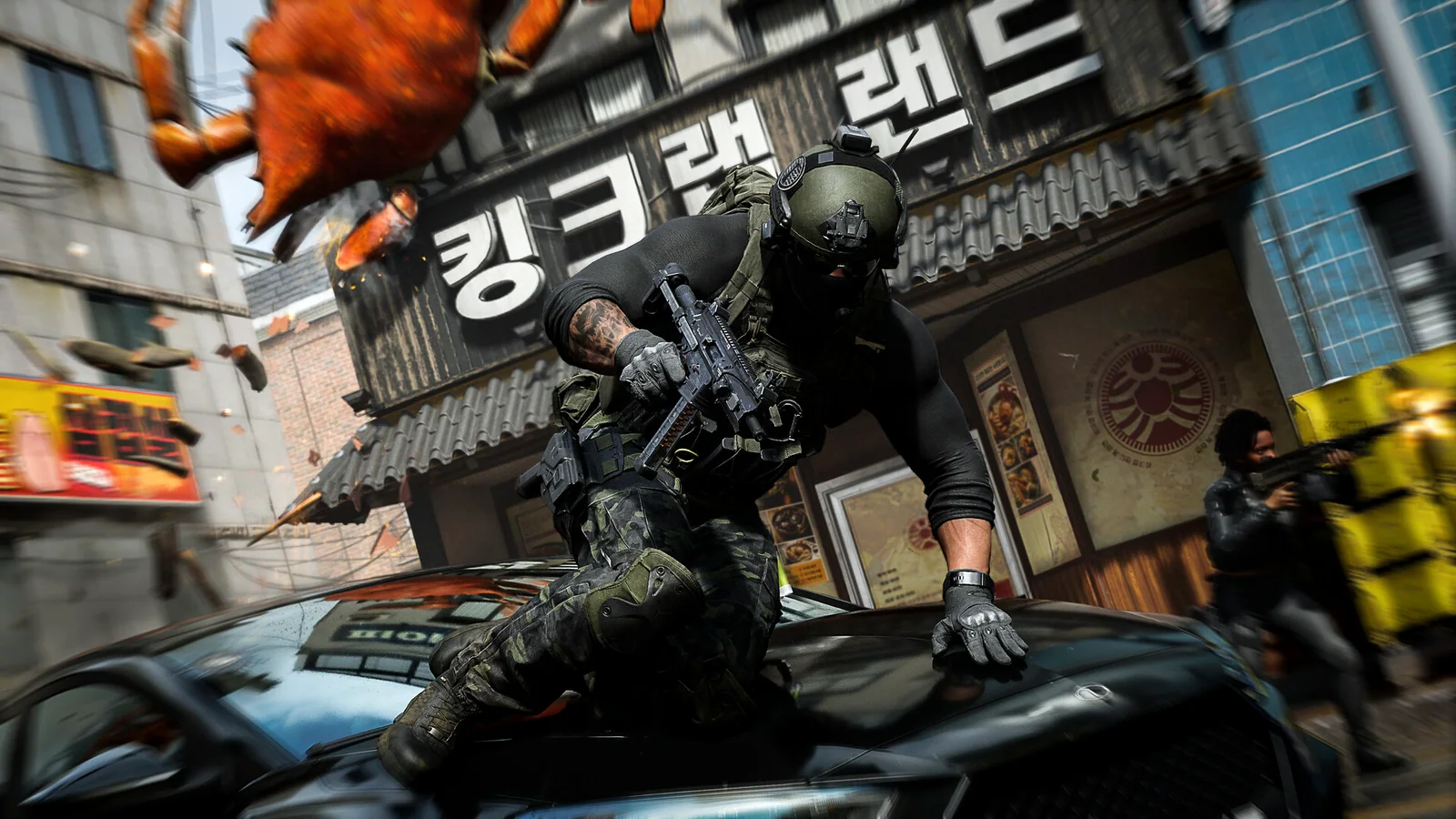
The headline change is the return of large-scale maps, combining vehicle and infantry combat across locations shaped by the campaign’s global conflict. The stated design intent covers the full range from tight close-quarters combat to open battlefield engagements, and the explicit goal is to keep every fight fast, tactical and competitive.
This is a meaningfully different balance shape from Modern Warfare III’s compact arena maps. Large-scale maps mean:
- Vehicle lanes that dominate certain rotations and punish infantry
- Sightlines that decide engagements across open ground
- Spawn layouts and objective order that matter more than individual aim
- Playstyles that differ by map rather than by player skill alone
Because the maps are shared with the campaign’s global conflict, the same locations recur across modes — a player who learns a map in DMZ has a head start in multiplayer, and vice versa.
DMZ
DMZ is the mode where Modern Warfare 4 makes its biggest statement, and the store listing calls it the definitive Call of Duty extraction experience — “a living combat sandbox where every deployment is a new story.”
The loop is deliberately unconstrained: loot, fight, negotiate, betray and extract with whatever you can carry. Players operate as an off-the-books asset behind enemy lines, recovering advanced military technology left in the wake of war, deploying solo or with a squad.
What makes DMZ a different game rather than a multiplayer variant:
- Extraction is the win condition, not a round score. Leaving with your gear is the point; dying loses it.
- Loot has value and risk simultaneously — more valuable loot means slower movement and a louder presence.
- Negotiation is a mechanic. Other squads are a variable, not only a threat.
- Gear carries over between runs, so a bad deployment compounds.
DMZ is also the mode with the tightest connection to the wider map set. Hajin is the primary DMZ map from DMZ early access on October 20, and X01 arrives in Season 1 on November 6 as a second DMZ map — a sealed GRANIT Arms black site, fully enclosed and multi-floored, reached through Hajin.
DMZ and campaign are not the same content
The DMZ has its own rules, its own loot economy and its own failure conditions. The map may share a location with the campaign, but the objective, the pacing and the stakes are different enough that knowledge of one does not transfer to the other. The mode is where extraction-specific knowledge — spawn timing, loot routing, exfil windows — becomes the dominant skill.
Warzone 2.0
Warzone 2.0 runs as a parallel title, and Modern Warfare 4’s content feeds into it directly. Confirmed at launch and in Season 1:
| Content | Status |
|---|---|
| All 33 MW4 base weapons, including Blueprint variants | Season 1 Warzone integration Activision launch roster |
| All Modern Warfare 4 Operators | Season 1 Warzone integration |
| Warzone Operator Skin toggle | Season 1 Warzone integration |
| Hajin | Battle Royale map, Season 1 |
| Zodiac | Resurgence map, Season 1 |
| X01 | DMZ map, Season 1 |
Two distinct Warzone modes are already referenced by name: Battle Royale on Hajin and Resurgence on Zodiac. Zodiac was built primarily for Resurgence, and was playable during Weekend 2 of the Modern Warfare 4 open beta.
Why three pillars is the right shape
Multiplayer and DMZ share the operator kit and the weapon pool, so progression earned in one is not wasted. The campaign supplies the fiction and the locations. Warzone 2.0 supplies the large-scale free-roam layer.
The practical consequence for a player: multiplayer is where you learn the maps, DMZ is where you learn the gear economy, and Warzone is where the two meet. Most MW4 players will drift between all three, and the shared weapons mean time in any one of them contributes to the same mastery.
Browse this wiki
Related Articles
dmz
DMZ free trial on Steam: until November 11, 2026
Steam lists a free trial for the Modern Warfare 4 DMZ as a separate app, running from November 6 to November 11, 2026 at 10AM PT.
game-modes
MW4 patch notes: November 5-7, 2026
MW4 Season 1 launch notes for November 5, 6 and 7, 2026: a 100-tier Battle Pass, four maps, two new weapons, the X01 DMZ zone and a Steam crash.
game-modes
MW4 Season 1 Battle Pass and BlackCell
The official Season 1 Battle Pass: 100 tiers, 1,100 COD Points, BlackCell rewards, eight store bundles and the tier-by-tier reward track.
Was this helpful?
Thanks for the feedback!